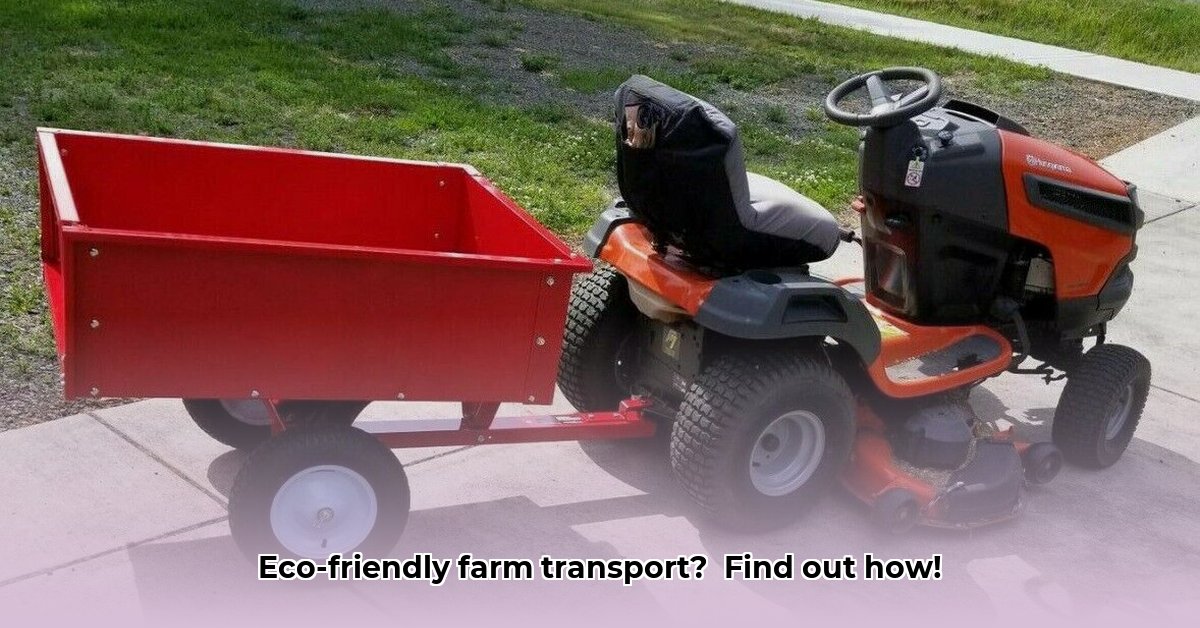
Running a small, sustainable farm presents unique challenges, and efficient transportation is key. Whether you're moving harvested crops, transporting supplies, or relocating equipment, the right trailer can significantly impact your operation's success and environmental footprint. This guide focuses on lawn tractor utility trailers, providing insights into selecting, using, and maintaining them for optimal sustainability. We'll explore various trailer types, assess their environmental impact, and offer practical steps to make informed, eco-conscious choices. For more information on choosing the right trailer, check out this helpful resource: Trailer Selection Guide.
Types of Lawn Tractor Utility Trailers and Their Applications
Selecting the right trailer is crucial for efficient farm operation. Just as you wouldn't use a screwdriver to hammer a nail, the best trailer depends on the task and terrain. Consider these options:
| Trailer Type | Typical Load Capacity (lbs) | Best Terrain | Ideal Uses |
|---|---|---|---|
| Lightweight Single-Axle | 500 - 1000 | Paved roads, smooth fields | Tools, small harvests, light garden waste |
| Medium-Duty Single-Axle | 1000 - 1500 | Packed dirt, gravel roads | Larger equipment, moderately heavy materials |
| Heavy-Duty Single-Axle | 1500 - 2000 | Moderate to rough terrain | Heavier loads, larger harvests, soil, etc. |
| Heavy-Duty Two-Axle | 2000+ | Rough terrain | Very heavy loads, large equipment, construction materials |
Important Note: Never exceed the manufacturer's stated weight capacity. Overloading can damage your trailer, tractor, and potentially lead to accidents.
The Environmental Impact of Your Trailer: A Holistic View
Sustainable farming goes beyond organic produce; it encompasses every aspect of your operation. Your trailer's environmental footprint begins with its manufacturing. The materials used, energy consumption during production, and transportation all contribute to its carbon footprint. A durable trailer with a long lifespan significantly reduces waste compared to frequent replacements. Choosing trailers made from recycled materials directly minimizes environmental impact by reducing demand for new resources. How long do you expect your trailer to last? This is crucial for calculating lifecycle costs and environmental impact.
Choosing a Sustainable Trailer: A Practical Guide
Selecting a sustainable trailer involves careful planning and consideration of various factors. Here’s a step-by-step guide:
Assess Your Needs: Honestly evaluate your hauling requirements. What's the heaviest load? What terrains will you navigate? This assessment ensures you choose the right size and durability.
Prioritize Durability: A robust trailer with reinforced frames, strong axles, and high-quality tires will last longer, minimizing waste in the long run. This is a crucial aspect of minimizing your environmental footprint.
Material Selection: Inquire about the materials used. Recycled steel and aluminum trailers offer lower environmental impact than those made from entirely new materials. Consider sustainably harvested wood if appropriate for your application.
Life Cycle Cost Analysis: Sustainable trailers may have a higher upfront cost, but their longevity and reduced environmental impact often lead to lower overall costs over their lifespan. It’s an investment in a greener future.
Holistic Transportation: Consider the entire transportation process. Can you use a more fuel-efficient tractor to further reduce your carbon footprint? Optimizing the entire system yields better sustainability results.
Maintaining Your Trailer: Maximizing Longevity and Reducing Waste
Regular maintenance is crucial for extending a trailer's lifespan. This preventative approach reduces waste and maximizes your investment:
Regular Inspections: Conduct a visual inspection before each use. Check for loose bolts, worn tires, or any signs of damage. Catching minor issues early prevents major problems.
Cleanliness: Regularly clean your trailer to remove dirt, debris, and corrosive elements that accelerate rust and wear. This simple practice significantly extends your trailer's usable life.
Lubrication: Keep moving parts lubricated to reduce friction and wear. Applying grease to moving parts is a small effort with a big reward for longevity.
Tire Care: Properly inflated tires improve fuel efficiency and prevent premature wear and costly tire replacements. Regular tire rotation ensures even wear.
The Future of Sustainable Trailer Design: Emerging Trends
Innovations in sustainable trailer design are constantly emerging. We can expect to see increased use of lightweight composite materials, reducing weight and fuel consumption. Advancements in tire technology will improve efficiency and longevity. The potential for trailers designed specifically for electric tractors offers a completely emissions-free transport solution. The future of sustainable agriculture includes innovative and eco-friendly trailers.
Dr. Emily Carter, Professor of Environmental Engineering at the University of California, Berkeley, states, "Investing in durable, sustainably-made trailers is a critical step toward reducing the environmental impact of small-scale farming operations. These choices contribute to a more circular economy and a healthier planet."
Conclusion: Investing in a Sustainable Future
Choosing a sustainable lawn tractor utility trailer is not just about efficiency; it's a commitment to a greener future for agriculture. By considering the factors discussed in this guide, you can make informed choices that benefit your farm's productivity and the environment. Let's build a more sustainable agricultural landscape, one trailer at a time.